Wine region Hohenlohe
Wine landscape
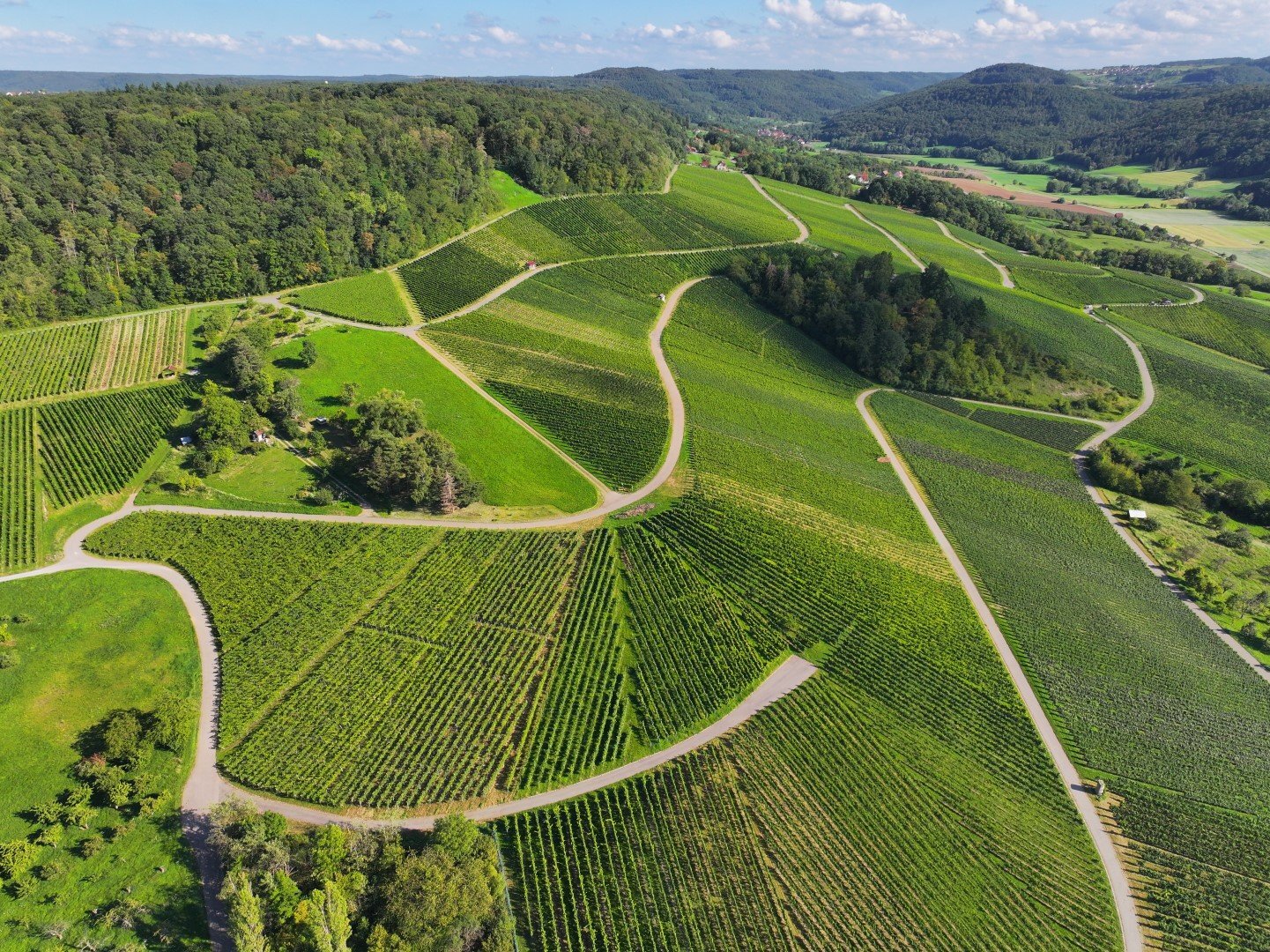
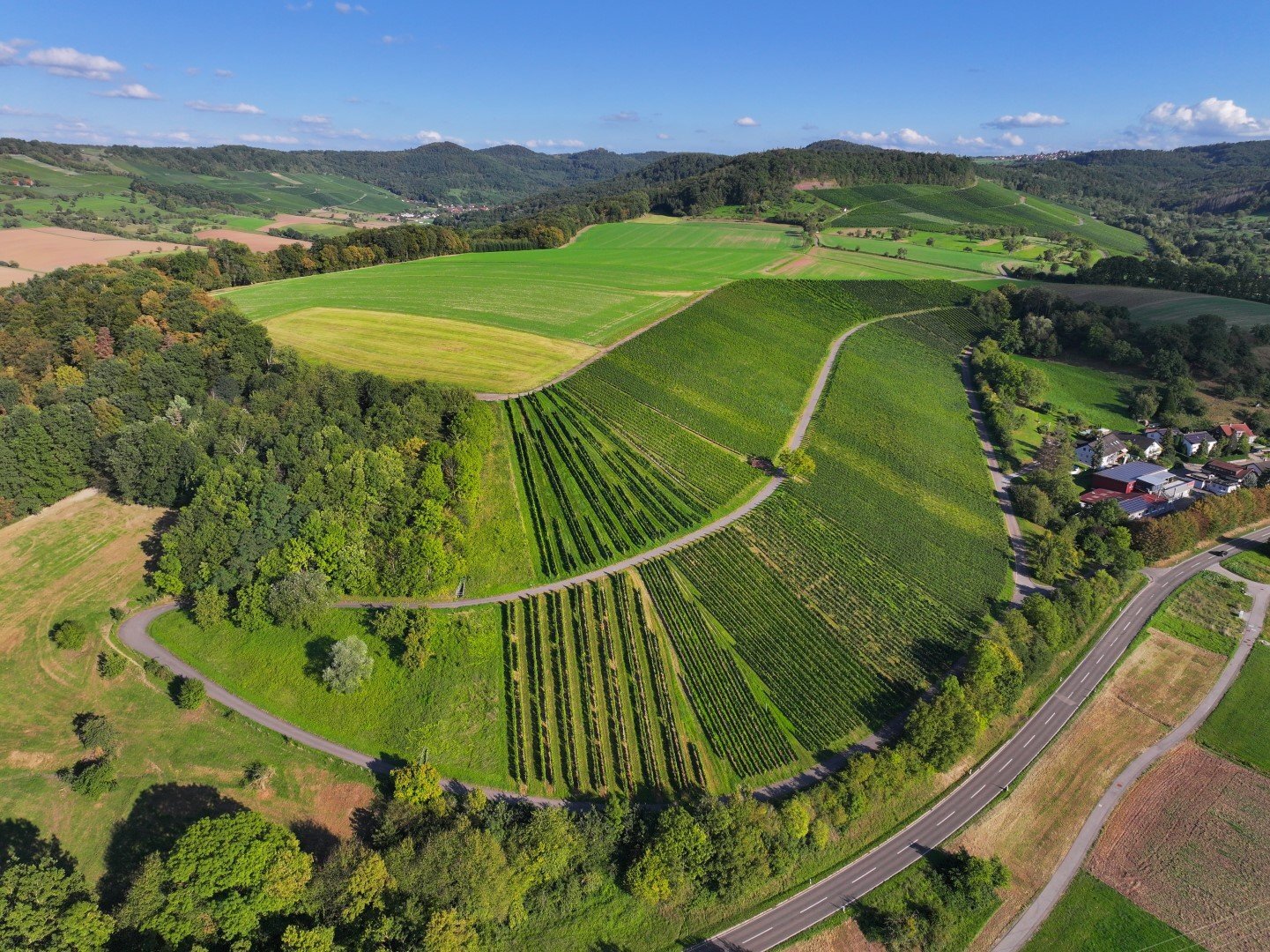
In the Hohenlohe wine region, the soils are mainly characterized by Keuper and shell limestone. In the north of Hohenlohe county, at the Jagst and Kocher rivers, wine thrives on mineral-rich, permeable shell limestone. This soil forces the vines to root deeply.
The landscape is characterized by rocky ridges and stone vineyard walls. This creates ideal conditions for delicate wines, especially for the Silvaner, Müller-Thurgau, Burgundy and Portugieser varieties.
In the southern parts of Hohenlohe county, on the Hohenlohe plain around Bretzfeld, Öhringen, Pfedelbach and Neuenstein, heavy, nutrient-rich and deep Keuper soils provide an excellent water supply for the vines, resulting in distinctive wines. These soils are characteristic of Württemberg. The high proportion of gravel on the soil surface promotes soil warmth. Particularly full-bodied wines mature on the gypsum keuper found in some locations.
Wine-growing communities and wine villages
Wine is grown on around 803 hectares within 12 of the 16 municipalities of Hohenlohe county. The main wine-growing area is the Weinsüden wine village of Bretzfeld, comprising roughly 268 hectares. There are 149 hectares of vineyards around the wine village of Pfedelbach and 119 hectares around the large district town of Öhringen.
The remaining 267 hectares are distributed among the wine-growing communities in the Kocher Valley with Ingelfingen, Künzelsau, Niedernhall, Forchtenberg and Weißbach and in the Jagst Valley in Krautheim, Dörzbach and Schöntal.
While the vineyards of the private wineries are concentrated in individual communities, Weinkellerei Hohenlohe e.G. has the majority of a total of 550 hectares, and is supplied from vineyards located throughout all of Hohenlohe county.
Grape varieties
Traditional Württemberg grape varieties such as Trollinger, Lemberger, Pinot Noir and Black Riesling still dominate the red wines, while Riesling is the dominant white wine variety. The varieties vary from Portugieser, Pinot gris and Pinot blanc to international varieties such as Merlot, Cabernet franc, Syrah, Zweigelt, Chardonnay and Sauvignon blanc. Bouquet varieties such as Muskateller, Kerner, Muskattrollinger as well as new varieties such as Acolon, Cabernet Mitos, Dorio, Dorsa and Cubin or Regent also grow here.
Around 60 percent of the wines grown in the Hohenlohe wine region are red, with 40 percent white grape varieties. In terms of proportion, the Hohenlohe Plain mainly produces Trollinger, Lemberger and Burgundy varieties. In the Kocher and Jagst valleys, red and white grape varieties balance each other out, especially with Silvaner and Müller-Thurgau.
Wine experiences in Hohenlohe
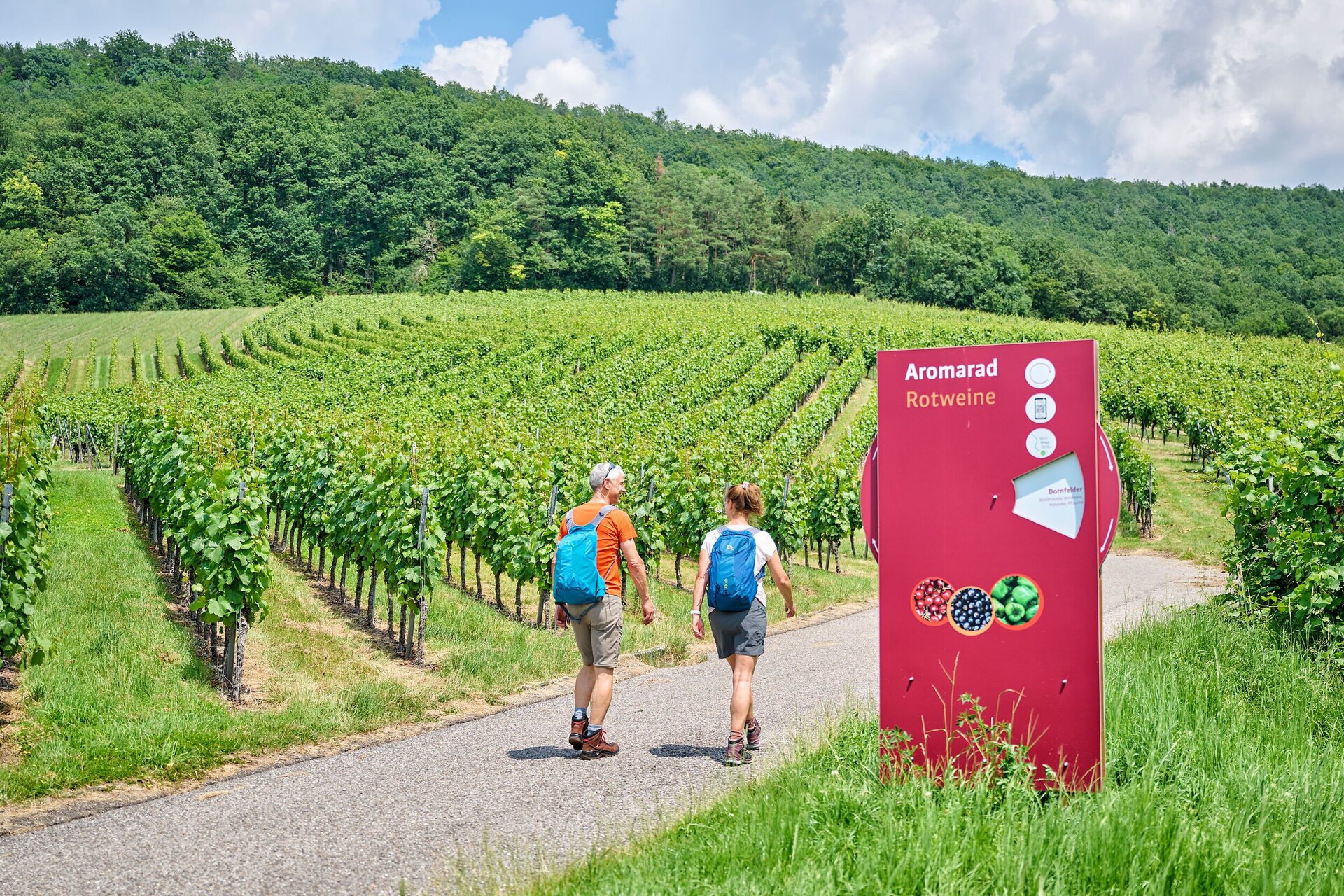
Immerse yourself in the fascinating world of wine and let the certified wine experience guides take you on an unforgettable journey. During a guided tour with a wine tasting, you will not only learn exciting background knowledge about viticulture and the history of wine production, but also experience the natural landscape up close, whether on foot or travelling comfortably in a covered wagon through the vineyards.
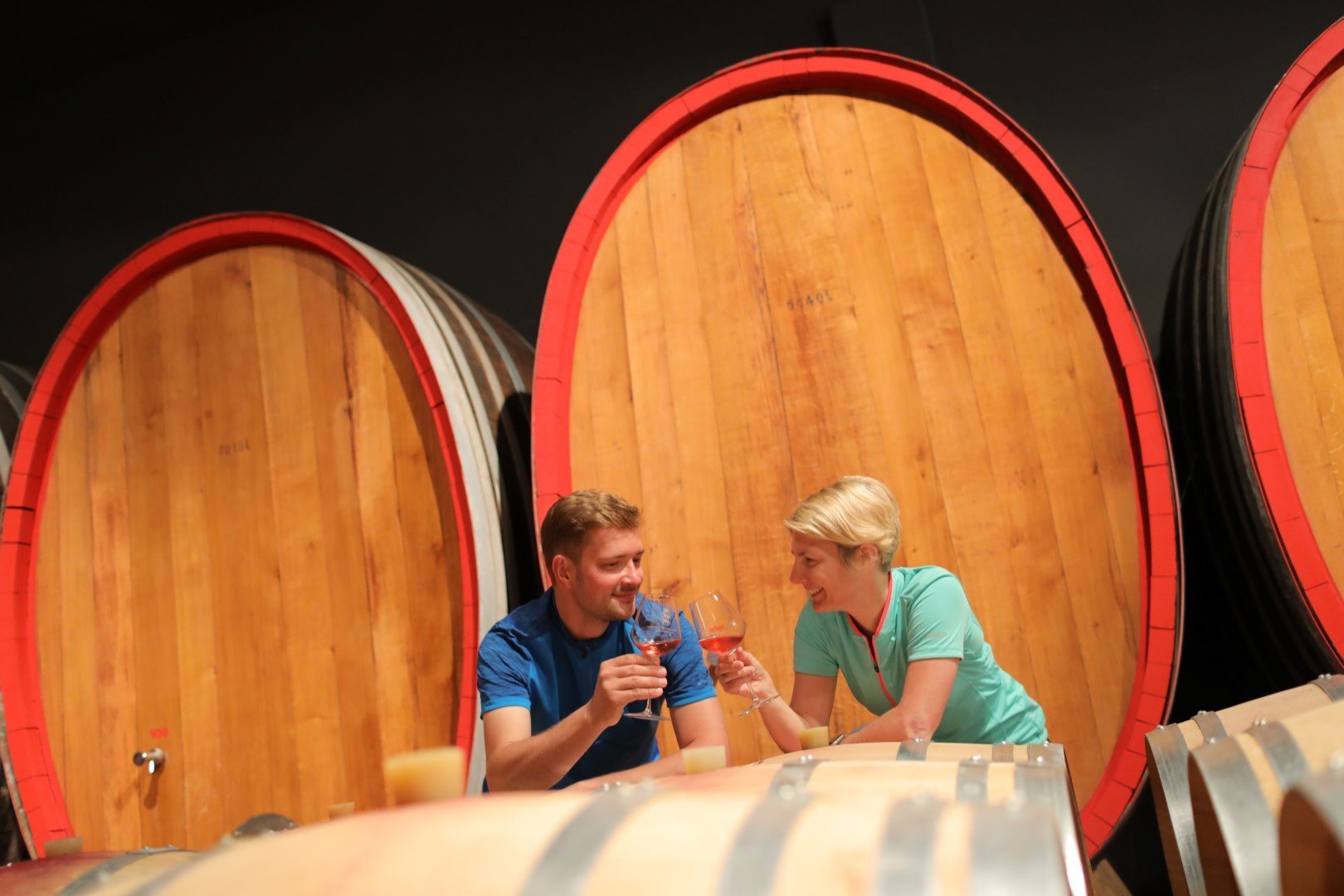
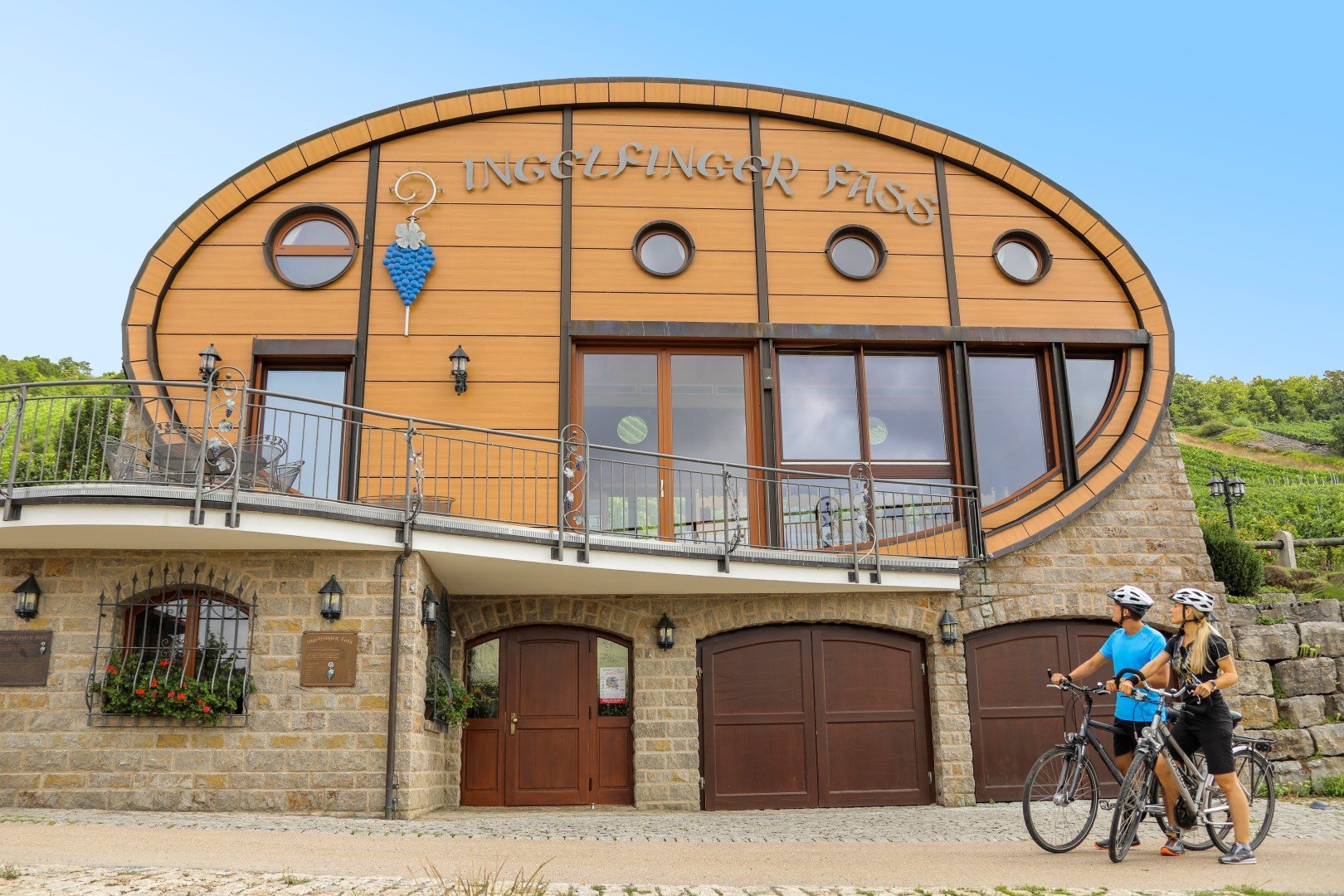
A special highlight awaits you in the wine museum in Pfedelbach: the impressive Fürstenfass, which can hold an impressive 64,664 liters of wine. You can marvel at this historical treasure in the large vaulted cellar and taste some fine wines. When exploring the wine trail in Ingelfingen, you can also admire the Ingelfinger Fass, the second largest free-standing barrel in Germany.
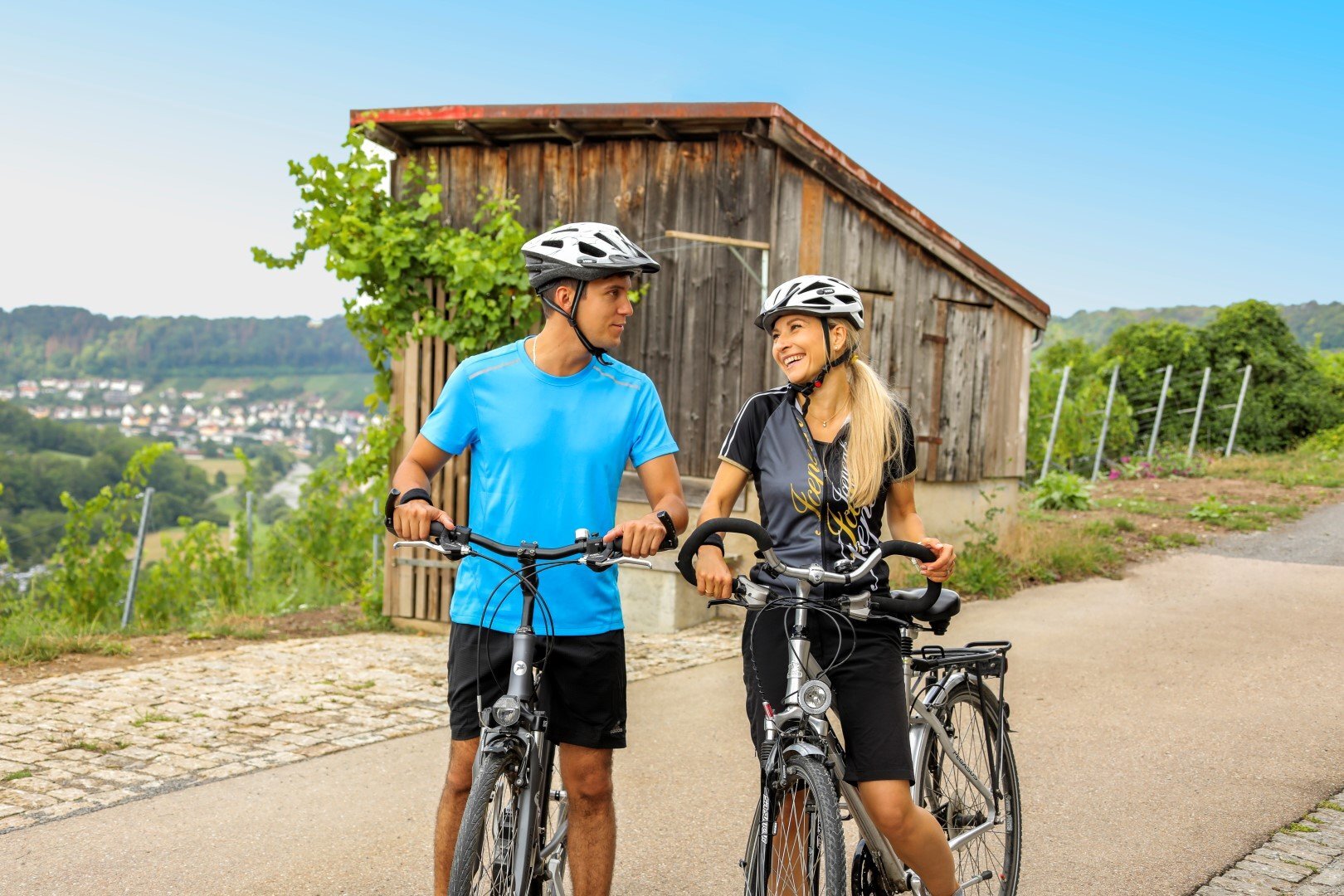
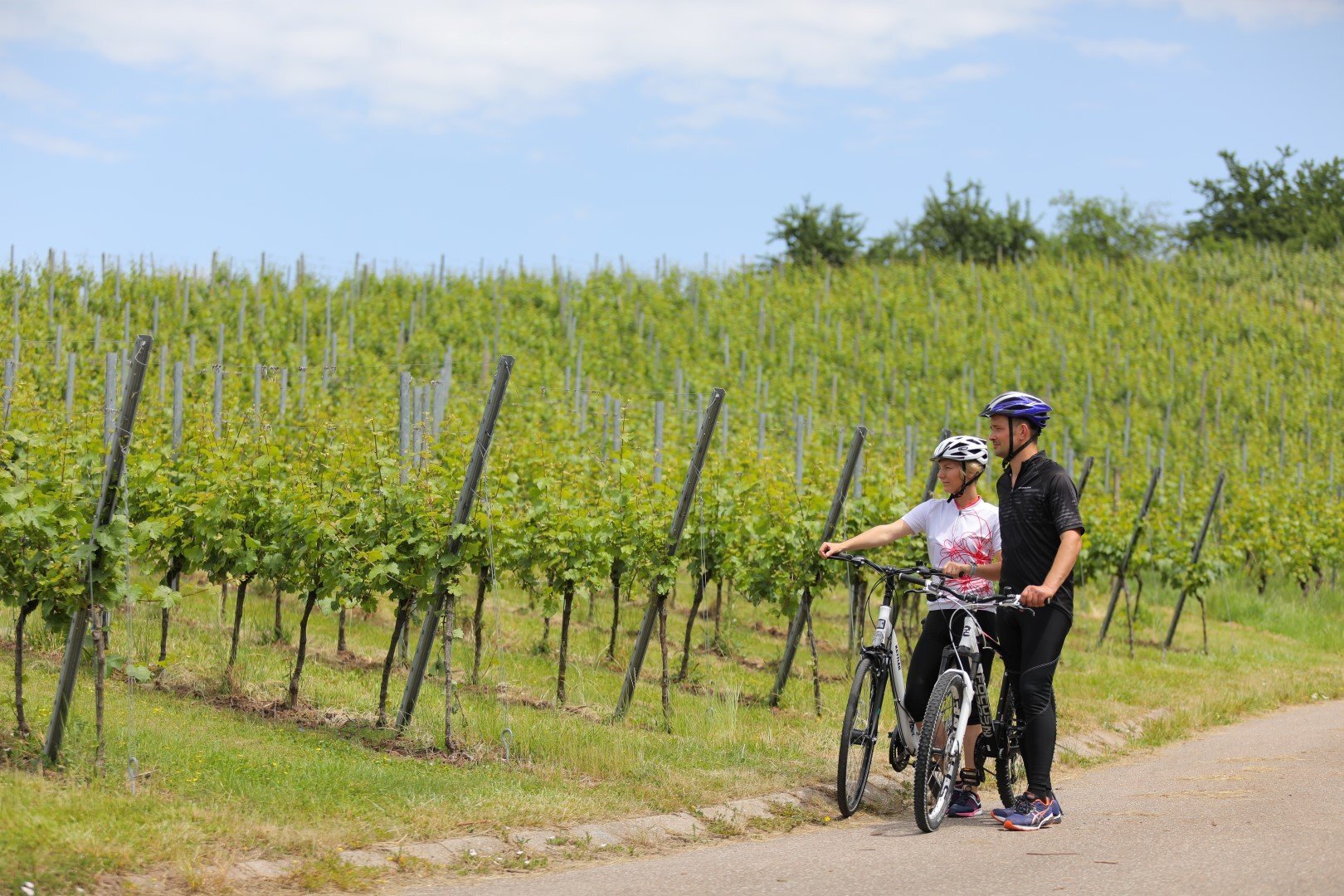
It is also wonderful to explore the Hohenlohe wine region by means of the Württemberg Wine Cycle Path (Württemberger Weinradweg). The route takes you through the idyllic Jagsttal valley and the lively Kochertal valley up to the Hohenlohe plain. Along the way, wine hotels and vinotheques invite you to take a break and enjoy culinary delights.
Hohenlohe meets Baden
In the Klepsau district of Krautheim, which belongs to the Baden wine-growing region, the vineyards of the “Heiligenberg” site cover 30 hectares. In particular, grave varieties such as Müller-Thurgau, Bacchus and Schwarzriesling thrive here and are marketed with great love and care by the Becksteiner Winzer Cooperative.
Wine events in Hohenlohe
The Hohenlohe wine region is known for its traditional wine events and regional festivals. The most notable event is the Hohenlohe Weindorf in Öhringen. For five days, the historic market square and courtyard garden of the town are transformed into a lively meeting place for wine lovers and connoisseurs. Over 200 fine wines are available for tasting, accompanied by atmospheric music and regional culinary delights.
Another unforgettable experience is the Rebenglühen, which takes place in March in the wine-growing community of Bretzfeld. Fire baskets and lights shine alight the darkness along a walking route of almost 4 kilometers, while bar huts provide refreshments along the way. This event is magical, especially in early spring when the nights are still cold.
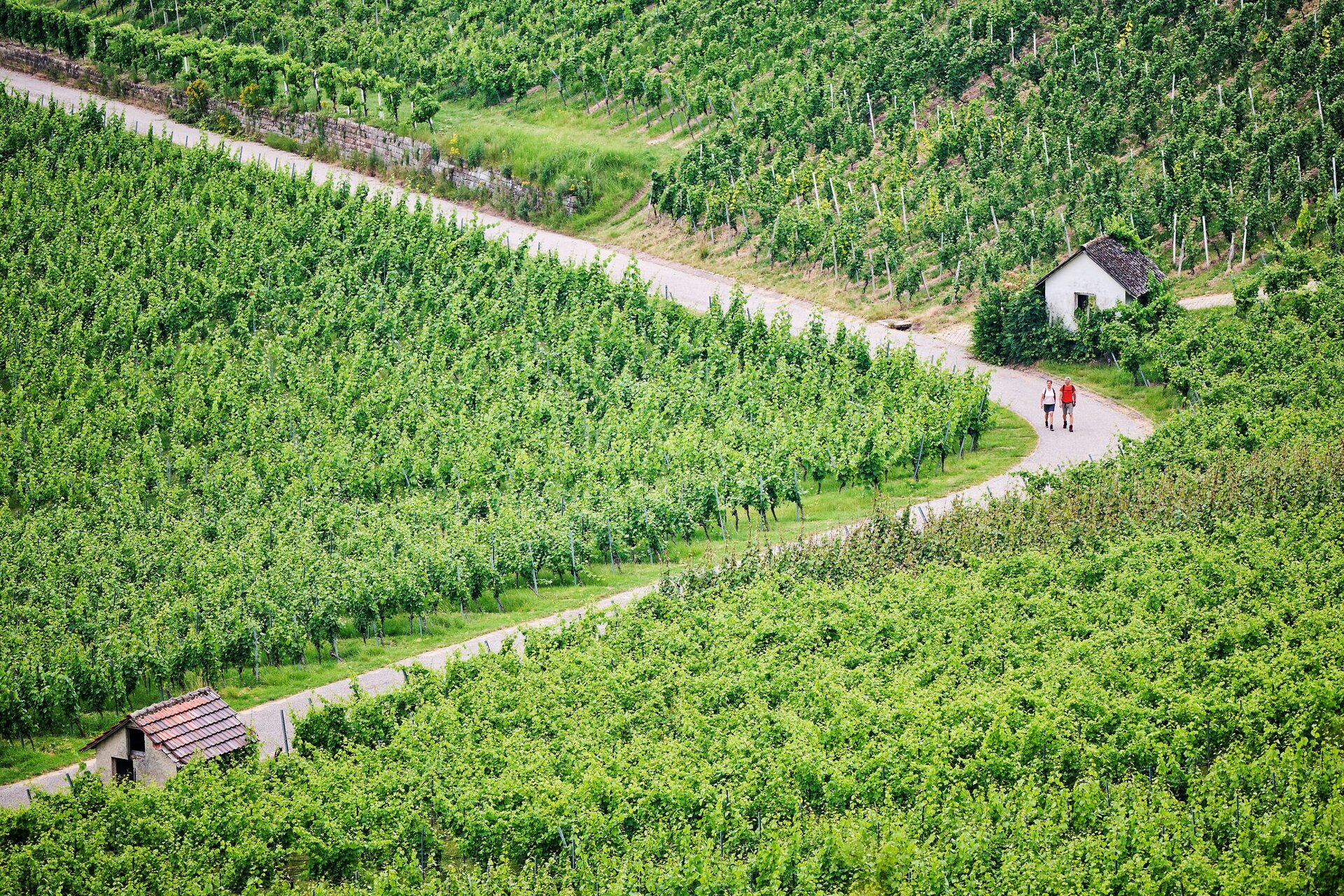
The Kochertaler Genießertour attracts hiking and wine lovers from near and far. On the 15-kilometer route, you will experience the impressive steep slopes of the Kochertal valley with breathtaking views and its charming town centers. You can enjoy a variety of wines and regional delicacies at eleven refreshment stops along the route.
You can also visit one of the traditional broom taverns (Besenwirtschaften) and wine taverns to experience Hohenlohe's authentic wine culture to the fullest.